New Warm Homes Funding: How You Can Cut Bills with Solar & Batteries
The UK Government has announced a major new Warm Homes

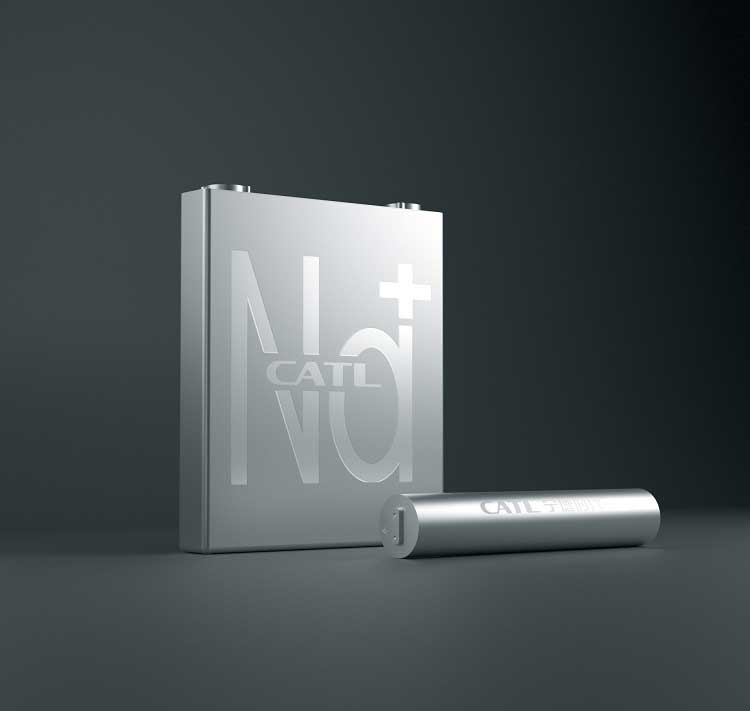
For months, speculation has been swirling across the EV and energy world. Now, the wait is over. CATL — the world’s largest battery manufacturer — has officially revealed full details of its new sodium-ion battery, and while it isn’t the mythical “90% cheaper” miracle some headlines hinted at, it is a genuinely transformative development.
In fact, this chemistry could mark the beginning of the end for lithium iron phosphate (LFP) in its current form.
Let’s start with cost — because that’s where most of the confusion has been.
CATL states that its new Naxtra sodium-ion cell currently costs around $19 per kWh at the cell level. For context, today’s large-scale LFP cells from manufacturers such as BYD, Tesla, and others typically sit in the $55–60 per kWh range.
That’s not a 90% reduction — but it is roughly 65% cheaper, which is extraordinary by any standard.
More importantly, CATL believes sodium-ion cell costs could fall even further, potentially reaching $10 per kWh within the next few years. Given this projection is coming from the world’s largest battery supplier — serving brands like Mercedes-Benz and BMW — it carries real weight.
And yet, price isn’t even the most important story here.
The most eye-catching claim is longevity.
CATL says the Naxtra sodium-ion battery can deliver 3.6 to 6 million miles (nearly 6 million kilometres) before capacity drops to 85% of its original level. That’s three to six times the lifespan of today’s best LFP batteries.
In practical terms, this means:
This fundamentally changes how we think about battery value, depreciation, and reuse.
Historically, sodium-ion batteries have struggled with energy density. Early versions typically sat in the 120–140 Wh/kg range, making them unsuitable for electric vehicles.
That’s no longer the case.
CATL’s new sodium-ion cells achieve 175 Wh/kg, which:
When you combine this with lower cost, improved safety, and dramatically longer lifespan, sodium suddenly becomes very hard to ignore.
Sodium-ion batteries also excel in areas where lithium often struggles:
These characteristics make sodium-ion batteries particularly attractive for northern climates, commercial fleets, and infrastructure applications.
CATL has made it clear this chemistry is not just about EVs.
The company is targeting:
Why does this matter?
Because if a battery costs half as much and lasts three times longer, the entire economics of renewable energy shift. Solar is already the cheapest form of electricity generation globally. Pair it with low-cost, ultra-durable sodium-ion storage, and fossil fuels — and even nuclear — start to look increasingly uncompetitive.
One of the most intriguing details CATL revealed — almost quietly — is a hybrid battery system that combines sodium-ion and lithium-ion cells in the same pack. CATL calls this concept “Freevoy.”
The logic is simple:
This approach allows manufacturers to:
This is a smart, capital-efficient strategy — and one that could accelerate adoption dramatically.
The headline $19 per kWh figure applies to the cell only. Once you add cooling systems, casing, electronics, and integration, full battery packs are likely to land around $40–45 per kWh.
That’s still far cheaper than anything currently available at scale.
CATL hasn’t confirmed when $10 per kWh cells will arrive, but two to three years appears realistic — especially given that sodium-ion cells can be produced on existing manufacturing lines.
Zooming out, this development goes well beyond electric vehicles.
If batteries can be:
Then countries no longer need to depend on imported lithium or fossil fuels. Sodium-ion batteries can be produced almost anywhere, used locally, and operate for decades.
This could represent a pivotal moment — one we may later look back on as the point when lithium began to lose its dominance.
Probably not overnight.
Lithium — especially high-energy chemistries — will still have a role where maximum energy density is required. But sodium-ion batteries are clearly poised to take over huge parts of the market, particularly where cost, durability, safety, and sustainability matter most.
Lithium and sodium are likely to coexist — but the balance of power is starting to shift.
This isn’t just another battery announcement. It’s a structural change in how energy storage might work over the next decade — for vehicles, grids, and entire economies.
What do you think?
Is sodium-ion the successor to lithium, or will they live side by side long-term?
The UK Government has announced a major new Warm Homes

On Wednesday, 21 January 2026 the UK Government has published

As of 2026, the Minimum Energy Efficiency Standards (MEES) for

We specialise in helping manufacturers turn their idle roof space

As a landlord or property manager in Essex, staying ahead